Showing posts with label Foetus. Show all posts

Sunday, May 10, 2026

100. Soup Dragons - Can't Take No More (Raw TV)


Five weeks at number one from 27th June 1987


When I started writing this blog, I did idly wonder what the hundredth number one might be, and promised myself that I wouldn’t draft a full list in advance and project ahead. That would spoil the beezer surprise for me, after all – supposing it’s a really appropriate, “era defining” classic? Or, even better than that, something the indie-kids would get agitated about; an Erasure single, perhaps, or one of the many Rhythm King releases that dominated the late eighties? What would that co(s)mic event tell us?

In reality, and at the risk of sounding like Hannah Fry, sequential numbers don’t care much about your preferred narratives. Just as nothing exciting happened when your car’s mileometer hit 5,000, and you just passed a boarded up carpet store rather than the Angel of the North or the house of the first person you ever loved, centenaries occur just because eventually they have to. The law of sequences demands it, and whether they coincide with something memorable depends entirely on the way the coin lands that day (go and look up the 100th Official UK Number One and you’ll see what I mean. I’ve been told the answer to that one before, many times, but I still have to keep reminding myself).

Back in 1987 though, The Soup Dragons taking the crown at this point would have felt somewhat appropriate, even though I can’t remember anyone noting it. While the start of their career saw them regarded as another one of those cheap and cheeky C86 acts, all fizz and charm, and the tail end saw them cast as bandwagon-hopping chancers, there was a brief sunlit period where they were critically lauded as the next big cult thing. Front page magazine shoots were gained, a highly reputable manager swept in to guide them, and a serious buzz emerged.

“Can’t Take No More” landed at the apex of all the fuss, and became their first single to enter the national Top 75. At this point, the group were still playing true to their roots, and the promotion around it was misleadingly low-key – The Chart Show played the accompanying video a few times, making a big deal of the fact that it was shot by the group for £80, tactfully ignoring the backing they had at this point.

The song itself is actually the third slam-dunk in a row for the band, following both “Hang Ten” and “Head Gone Astray” into some kind of scratchy indie heaven. The three singles are markedly different from each other yet still, amazingly, identifiable as Soups product. “Hang Ten” stays true to their C86 roots and serves up two minutes of exhilarating rattle and roll, while “Head Gone Astray” is somehow punky yet beautiful jangle pop, and then “Can’t Take No More” is a stranger beast still – shouty, stammering, always evolving then collapsing again, and downright furious about the inconsistencies and wrongdoings of a significant other. “Your attitude always ch-ch-ch-ch-ch-ch-changes/ like the weather!” rants Sean Dickson angrily, while staccato drumbeats and distorted guitars follow him behind.

It could choose to all be over in two minutes like “Hang Ten”, but instead it twists and evolves, featuring shimmering guitar breakdowns and taunting, childlike “na na na” vocalisations, before finishing on an ear-splitting electric organ break. It’s almost as if the group had two possible objectives, either a track akin to The Who’s “I Can See For Miles”, or a Slade styled rave-up, and decided to go for both at once, but keep the production and the presentation raw and cheap.

It’s easy to attempt something like this and come back with something perfectly listenable but ultimately insubstantial – thousands of low-key indie bands have done just that – but they channel so much adrenalin and frustration into one three minute single they manage to make the listener feel both peppy and disorientated at the same time. Elements of this, particularly the sharper and more discordant aspects, sound as if they would have slotted very neatly alongside some of the groups emerging out of the USA in a year or two’s time; Black Francis, for one, seems as if he might have appreciated it. Far from staying true to this indie era’s dominant idea that singles should be cheap, raw and simple, the Soups bounce and ricochet off the walls in ways which aren’t immediately predictable (the disorientating psychedelic dizziness of the latter half of each verse is interesting and proof they were already operating in a different territory to either The Wedding Presents or Bodines of this world).

Sunday, August 31, 2025

63. New Order - The Perfect Kiss (Factory)


Four weeks at number one from w/e 1st June 1985


Until very recently, I always assumed “The Perfect Kiss” had a long gestation period. Everything about it smacks of perfectionism and contemplation, feeling like a record which, without once being boring or indulgent, knows precisely what is needed and when.

It opens with fairly basic drum patterns, but it soon unfolds, introducing Peter Hook’s bassline boldly, followed by a beautifully twittering sequenced synth pattern, a second layer of bass level sequencing, a strong, triumphant chorus hook, then once you’ve finally succumbed to the idea that the song has a traditional structure, it reaches the halfway mark and decides to pull every conceivable melodic variation out of the bag. Peter Hook suddenly gets the idea that he needs to rock out and produce what can only be described as a Miami Vice chase sequence riff, then there’s a gentle rhythmic and ambient melodic breakdown involving ribbeting toads (nobody had that pegged on their New Order bingo card at the time), then skiffled kitchen noises, before the track becomes borderline symphonic.

Seven minutes in it decides it hasn’t said everything it wants to say, exploding into a crescendo of lasers and bright melodies. The group seldom sounded like Jean Michel Jarre, and probably wouldn’t take the comparison as a compliment, but this is the closest they came to exploring the idea of seventies progressive electronics, where being bold and exploratory, letting ideas sprawl and breathe and taking your own sweet time to sniff every avenue weren’t things to apologise for. If that makes “The Perfect Kiss” in danger of sounding like a chore or a bore, it’s actually anything but – every moment of it is a joy. It’s a rare example of a long, drawn out single which feels half the length of its actual playing time.

While the above may cause readers to conclude that “The Perfect Kiss” was a labour of love, in fact it wasn't - the track was recorded in a rush before they set off on tour. The only real clue to this frenzy lies in Sumner’s lyrics, which are even more half-arsed and disjointed than usual, offering fragmentary and contradictory ideas such as “Pretending not to see his gun/ I said let’s go out and have some fun” and “I know, you know/ we believe in a land of love” which never quite glue together in any meaningful way. Sumner later informed journalists that he actually didn’t know what the song was about and could only account for what inspired certain fragments, so it’s a series of torn up lyric book ideas thrown into the air, a jagged breadcumb trail of notions which ultimately lead nowhere.

Beyond that, it’s an unconventional and ambitious groove which may not have been as accessible as “Blue Monday”, but was certainly the first post- “Blue Monday” single to prove that the group still had the ability to produce something that was both epic and majestic – that it was obviously effortless for them to do so remains astonishing.

Both British radio and the record buying public seemed unimpressed, however, causing the single to be the first New Order single which wasn’t an import to fail to reach the Top 40. If Depeche Mode’s fortunes waned in the synth pop unfriendly mid-eighties, New Order’s crashed – Radio One, which later became a huge champion of the group, largely snubbed it despite its obvious strengths, turning their focus towards the slickly produced rock and soul of the day.

Sunday, July 13, 2025

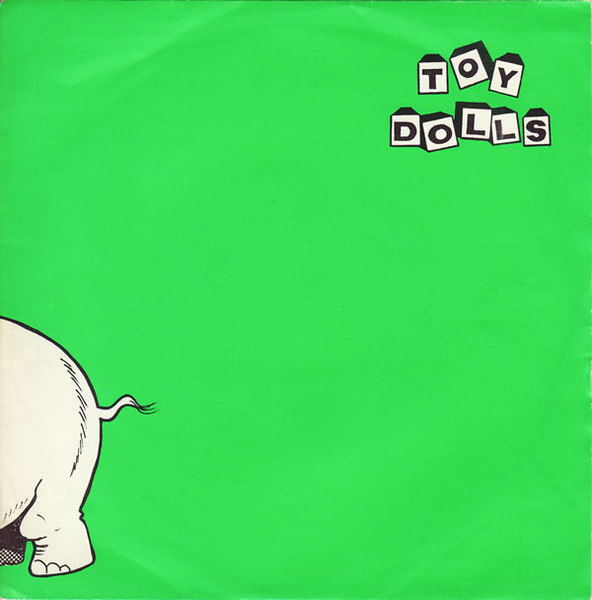
56. Toy Dolls - Nellie The Elephant (Volume)


Number one for seven weeks from w/e 15th December 1984


So then – where were you when you last heard the collective cry of “WooooooOOOOOOAARGH”? In my experience, it can be heard in the following strict set of circumstances:

1. As the enthusiastic accompaniment to somebody “downing a pint”.

2. As the tense sound made by football supporters during a critical penalty shot (usually followed either by cheers, an “ooh!” of disappointment, or even a deflated, almost sarcastic “Oh.”)

3. The noise made shortly before a group of pissed-up beef-necked overgrown schoolboys start throwing increasingly heavy objects around in a pub. It might start with beer mats and end with chairs. Usually, deep down, you know you should have left the place long before this occurred.

4. The sound shortly before the chorus of “Nellie The Elephant”.

Spot the odd one out there. We’ve encountered The Toy Dolls multiple times in our journey through the indie charts, and on every occasion it’s been noticeable just how much they inhabit their own world; it’s an absurd but not particularly sophisticated cross between the abrasive and the fey, the childlike and the rough. 

The group’s roots were firmly in the Punk Pathetique subgenre of Oi, where banal and trivial working class observations combined with a general air of frivolity and stupidity; if most of those groups focused on simple comedic situations such as trying to get served in a bar before closing time (Splodgenessabounds) or being caught kissing someone else’s woman and having to make your escape (Peter & The Test Tube Babies), the Toy Dolls were essentially doing the same only writing with thick crayons. Titles like “Cheerio and Toodle-pip”, all delivered in Olga’s high pitched music hall voice, felt as if they had emerged from ancient episodes of “Watch With Mother”. You got the impression that in Olga’s opinion, the whole of adult society hadn’t moved far beyond the kindergarten, so why should he?

Their cover version of the Mandy Miller song “Nellie The Elephant” had been released in 1982 to indie chart success, but didn’t really make much of a mark beyond the kind of dancefloors where punks gathered. The track never quite disappeared from those club playlists, though, and slowly and steadily found a fresh audience in 1984 thanks to stray bits of Radio One evening airplay getting noticed by the daytime crew (though John Peel, interestingly, consistently ignored it in favour of other Toy Dolls material). The track was reissued, and entered the lower reaches of the Top 100 in November, building up steam and then finally gatecrashing the Top 40 by early December.

Its popularity feels almost entirely due to the absurdities of the British Christmas market. Record buyers at Christmas time will happily part with money to hear anything which sounds as if it might evoke collective fun, whether that’s songs with superhumanly anthemic choruses, tracks their children could also appreciate, or novelty records which are frankly stupid but annoyingly catchy. For all its chugging punk rock stylings, “Nellie The Elephant” managed to tick all those boxes, and found itself appreciated by kids both literal and overgrown - the children at home getting excited about Christmas, and the ones in the outside world getting drunk at the works party; the Olgas and the Juniors of this world, some growing up and others falling down.

The Toy Dolls suddenly found themselves in the Christmas number four position, right behind the Three Kings of Band Aid, Wham’s “Last Christmas” and Paul McCartney’s Frog Chorus – all monstrous sellers. It was a colossal achievement for their tiny Sunderland indie label Volume, who were usually only used to worrying about getting enough copies of their singles pressed to keep them in the Indie Top 20. In this sense, “Nellie The Elephant” is an eccentric British victory for the rank outsider, the everyman partaking in daft follies in his spare time and then finding himself eyeballing an ex-Beatle for a top three chart position. And at Christmastime too! It’s a wonderful life indeed.

It has to be said that it’s not really a great piece of work in itself, though, and Peel’s reluctance to engage with it is not surprising. It’s a groundbreaker in that it feels like one of the first attempts by a punk or metal band to create a single out of unlikely source material. In the decades to come we will be treated to ironic covers of children’s songs and "cheesy" pop hits by no end of young men wearing studded leather jackets, but even taking that “innovation” into account, the single is really just a boozy racket.

In this respect, the gap between “Nellie” and Scaffold’s 1968 Christmas number one “Lily The Pink” is actually quite narrow. Both depend on the same stomping, chugging rhythm, perfect for bashing beer tankards on tables to. Both sound perfect for the kind of overly raucous Christmas party I must admit I never got along with – the toxically mixed kind which occasionally saw somebody fired from their job in the New Year, or saw old rows between good friends being resuscitated. Sometimes the line between the jolly drunken cry of “WooooAAARGH” and much more aggressive screaming and shouting can be very fine.